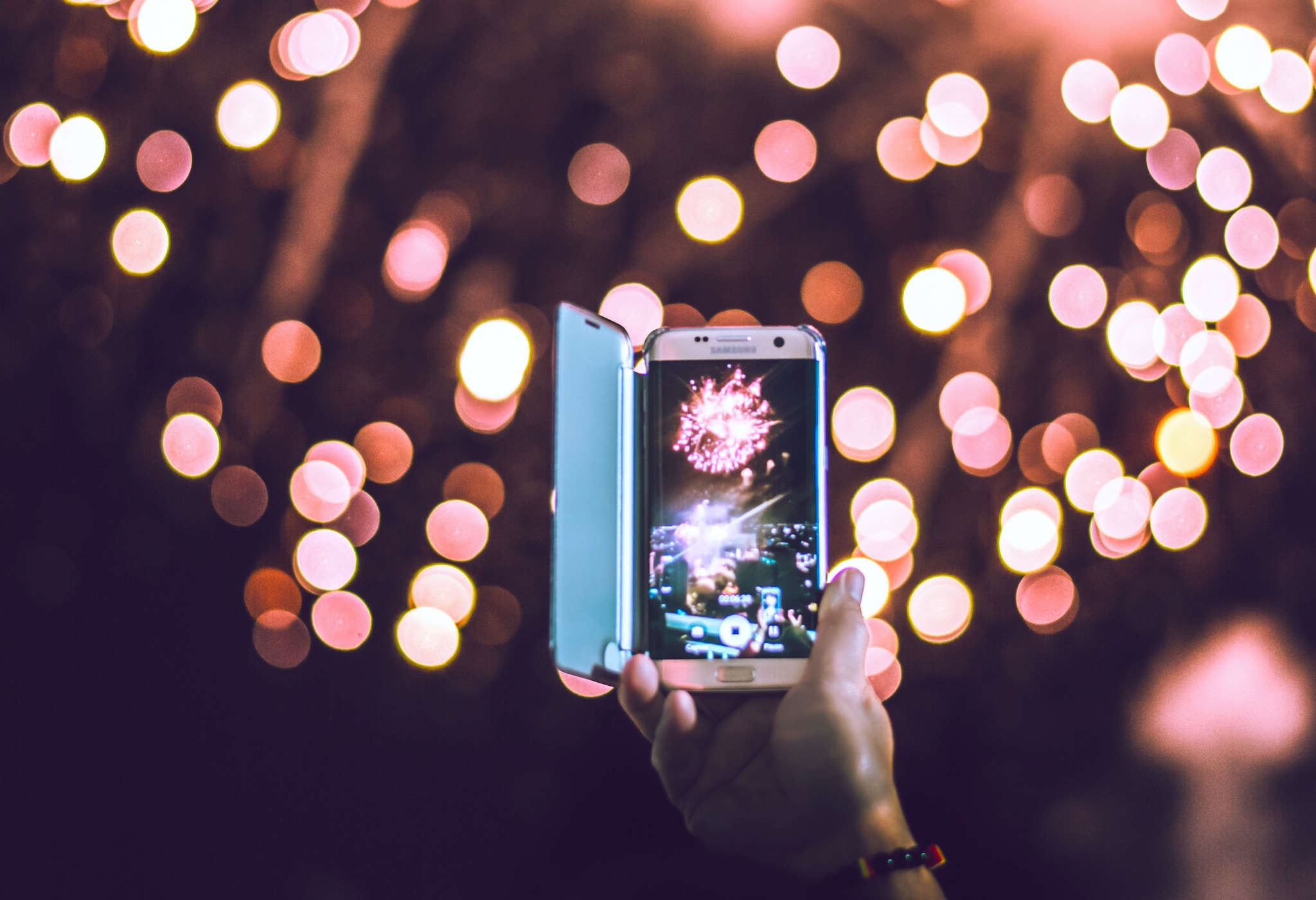
Fireworks are one of the hardest things to photograph on a phone. The sky is dark, the bursts are bright, and each one lasts about a second. Current iPhones and Android phones have the tools to handle it, as long as you set them up before the show starts. This guide covers the settings to use on an iPhone, a Samsung Galaxy, and a Google Pixel, plus the timing and framing tips that make the biggest difference.
Quick Answer
Steady your phone on a tripod or a solid surface, turn off the flash, lock focus on the part of the sky where the fireworks burst, and lower the exposure so the colors don’t blow out to white. Shoot in bursts during the first few minutes, before smoke builds up. For light trails, use a Live Photo with the Long Exposure effect on iPhone, Motion mode’s Long Exposure on a Pixel, or Pro mode with a 1 to 4 second shutter on a Samsung Galaxy. If your phone is missing these features, shop used camera phones on Swappa.
Before the Show: Set Up for Sharp Shots
Most blurry fireworks photos are decided before the first shell goes up. Take five minutes to get ready:
- Clean the lens. Wipe it with a microfiber cloth or a cotton shirt. A thumbprint turns every burst into a hazy glow.
- Steady the phone. A small tripod with a phone clamp is best. Otherwise, brace the phone on a railing, a car roof, or a cooler, or hold it with both hands and your elbows tucked in.
- Avoid pressing the screen. Use the volume button as a shutter, the self-timer, or a Bluetooth remote so your tap doesn’t shake the shot.
- Charge up. Cold nights drain batteries faster, and video eats power. Bring a power bank on New Year’s Eve.
- Stand upwind. Smoke drifts with the wind. If it blows toward you, it will fog every photo after the first few minutes.
- Plan your frame. A skyline, water, trees, or a crowd in silhouette gives the fireworks scale. Turn on the camera grid (on iPhone, Settings > Camera > Grid) to keep the horizon level.
Best iPhone Settings for Fireworks
- Turn off the flash. Flash can’t light the sky, and it slows each shot.
- Lock focus and exposure. Touch and hold the area where the bursts appear until AE/AF Lock shows, then drag the sun icon down to darken the scene. The sky will look nearly black, and the fireworks will keep their color.
- Shoot in bursts. On iPhone XS, XR, and later, slide the shutter button to the left and hold it, or turn on Settings > Camera > Use Volume Up for Burst. Holding the shutter button itself records a QuickTake video, which is why older instructions no longer work.
- Turn off Night mode for handheld shots. The iPhone 11 and later models (except the iPhone SE) turn Night mode on automatically in the dark, and its longer capture smears bright bursts. Tap the Night mode icon and set it to Off.
- Use the telephoto lens, not pinch zoom. On Pro models, tap the 3x, 4x, or 5x button to get closer without the quality loss of digital zoom. On any iPhone, zooming past the lens buttons adds grain.
- Try Live Photos for light trails. Turn on Live Photos, keep the phone on a tripod, and shoot a burst as it opens. In the Photos app, open the photo, tap the Live menu, and choose Long Exposure to turn the burst into streaks of light.
Pro iPhones from the iPhone 12 Pro on can also shoot ProRAW, which keeps more detail in the bright and dark parts of the shot if you plan to edit.
Best Android Settings for Samsung Galaxy and Google Pixel
Samsung Galaxy
Samsung’s Pro mode (in the Camera app under More > Pro) gives you manual control, and it is the best tool for fireworks on a Galaxy:
- ISO: 50 to 100, to keep the sky clean.
- Shutter speed: 1/30 second handheld for single bursts, or 1 to 4 seconds on a tripod for trails.
- Focus: switch to manual focus and set it to infinity (the mountain icon).
- Flash and Night mode: off.
Recent Galaxy S Ultra models also support Expert RAW, which saves RAW files for editing.
Google Pixel
- Turn off Night Sight for single bursts, because it blends frames and can smear them. Use regular Photo mode, tap the sky where the bursts appear, and drag the brightness slider down.
- Use Motion mode’s Long Exposure (Pixel 6 and later) on a tripod to turn bursts into trails.
- Use Pro controls on Pixel 8 Pro and later Pro models to set shutter speed and ISO yourself, with the same settings as the Samsung list above.
On any Android phone without a manual mode, a manual camera app such as Open Camera adds ISO and shutter control.
Fireworks Settings at a Glance
| Setting | iPhone | Samsung Galaxy | Google Pixel |
|---|---|---|---|
| Flash | Off | Off | Off |
| Focus | Touch and hold for AE/AF Lock | Pro mode, manual focus at infinity | Tap the sky, then lock |
| Exposure | Drag the sun icon down | ISO 50 to 100 in Pro mode | Drag the brightness slider down |
| Night mode | Off for handheld bursts | Off | Night Sight off |
| Light trails | Live Photo with Long Exposure | Pro mode, 1 to 4 second shutter | Motion mode, Long Exposure |
| Zoom | Telephoto button, no pinch zoom | Telephoto lens, no digital zoom | Telephoto lens, no digital zoom |
Timing and Framing Tips
- Shoot early. The best photos come in the first few minutes. By the finale, smoke fills the sky.
- Start the burst on the launch. Listen for the thump of the shell and start shooting as it climbs, so you catch the moment it opens.
- Shoot wide first. Get a wide shot with the skyline to find where the bursts land, then switch to the telephoto for close-ups.
- Pick the orientation for the shot. Horizontal works for skylines and water reflections. Vertical works for a single tall burst.
- Record video too. A 4K video captures sound and every burst, and you can pull a still frame later. On iPhone, tap the white shutter button while you record to take a photo at the same time.
Fixes for Common Fireworks Photo Problems
| Problem | Likely Cause | Fix |
|---|---|---|
| Blurry or smeared bursts | Handheld shot with Night mode or a slow shutter | Brace the phone, turn Night mode off, and shoot in bursts |
| Bursts blown out to white | Exposure set too high for the bright light | Lock focus and exposure, then lower exposure |
| Grainy, noisy sky | High ISO or digital zoom | Lower ISO in Pro mode, use a real telephoto lens, or crop later |
| Missed the moment | Shutter lag or starting too late | Use burst or video, and start as the shell rises |
| Hazy, washed-out photos | Smoke, or a dirty lens | Clean the lens, move upwind, and shoot early in the show |
| Camera keeps refocusing | Autofocus can’t find a dark sky | Lock focus on a distant building or light, or use manual focus |
Is Your Phone Holding You Back?
Technique fixes most fireworks photos, but older phones are missing the tools that matter at night. Night mode arrived with the iPhone 11 and has never been on the iPhone SE. Telephoto lenses are on Pro and Ultra models, Pixel’s Long Exposure needs a Pixel 6 or later, and manual Pro controls start with the Pixel 8 Pro. A used flagship from a few years back has all of them for a fraction of its original price:
| Used Phone | Night and Fireworks Features | Average Sale Price on Swappa |
|---|---|---|
| iPhone 13 | Night mode, Live Photos | About $242 (128GB) |
| Google Pixel 7 Pro | Night Sight, Motion mode Long Exposure, 5x telephoto | About $223 (128GB) |
| Google Pixel 8 Pro | Adds Pro controls for shutter speed and ISO | About $331 (128GB) |
| iPhone 14 Pro | Night mode, 3x telephoto, ProRAW | About $364 (128GB) |
| Samsung Galaxy S23 Ultra | Pro mode, Expert RAW, 3x and 10x telephoto | About $400 (256GB) |
According to Swappa sale data (September 23, 2026). Prices change daily, so check the live price page before you buy.
For full camera rankings, see Best Used Phones for Photography on a Budget and Which iPhone Has the Best Camera? 2026 Picks by Budget.
Shop Used Camera Phones on Swappa
Upgrading? Your old phone can help pay for the new one. How to Sell Your Used Phone for the Most Money walks through pricing and listing it on Swappa.
FAQ
What is the best setting for fireworks on iPhone?
Turn off the flash, touch and hold on the area where the fireworks burst to lock focus and exposure, then drag the exposure down. Shoot in bursts by sliding the shutter button to the left. Turn Night mode off for handheld shots, and for light trails on a tripod, take a Live Photo and apply the Long Exposure effect in the Photos app.
Should I use Night mode for fireworks?
Usually not for handheld shots. Night mode and Night Sight capture over a longer time and blend frames, which smears fast, bright bursts. Turn them off for single bursts and lower the exposure instead. On a tripod, a longer capture can work if you want light trails.
How do I capture fireworks light trails on my phone?
Put the phone on a tripod first. On iPhone, take a Live Photo and choose the Long Exposure effect in the Photos app. On a Pixel 6 or later, use Long Exposure in Motion mode. On a Samsung Galaxy, use Pro mode with ISO 50 to 100 and a shutter speed of 1 to 4 seconds.
Why are my fireworks photos blurry?
Blur usually comes from camera shake during a long capture. Brace the phone or use a tripod, turn off Night mode for handheld shots, use the volume button or a timer instead of tapping the screen, and clean the lens before the show.
Is it better to take a video of fireworks?
Often, yes. A 4K video captures every burst and the sound, and you can pull a still frame from it later. On iPhone you can tap the white shutter button while recording to take photos at the same time, so you get both.
The Bottom Line
Great fireworks photos come from a steady phone, the flash off, focus and exposure locked, and burst shots in the first few minutes of the show. Use Live Photos, Motion mode, or Pro mode when you want light trails, and record a video as a backup. If your phone lacks Night mode, a telephoto lens, or manual controls, a used camera phone adds them for much less than new.